Current Issue
Vol. 6 No. 2 (2025)
Articles
-
Articles Open Accesspp. 20-29
Developing a Human Rights and Democracy Framework for AI Governance in European Educational Settings
This study develops an operational governance framework for the deployment of artificial intelligence in the European education sector, ensuring compliance with human rights, the rule of law, and democratic principles established by the Council of Europe. Specifically, the framework addresses…
-
Articles Open Accesspp. 39-47
The Use of Spatial Planning Tools and Data Visualization to Resolve Land-Use Conflicts in Dutch Urban Environments
This study evaluates the effectiveness of GIS-based data visualisation platforms and spatial simulation models in facilitating urban spatial planning processes and resolving land-use conflicts in the densely configured Dutch urban environment. The Netherlands presents a uniquely demanding…
-
Articles Open Accesspp. 1-9
Digital Transformation Maturity Model for Public Health Services in Regional Australian Settings
This study develops and validates a Digital Transformation Maturity Model (DTMM) specifically calibrated to the structural, geographic, and equity imperatives of public health services in regional Australia. Existing digital maturity frameworks, predominantly derived from metropolitan hospital and…
-
Articles Open Accesspp. 10-19
Barriers to Advanced Technology Adoption (AI/Cloud) in Small and Medium Enterprises in Developing Oceania Nations
This study qualitatively identifies and analyses the primary mechanisms impeding the adoption of advanced technologies, specifically Artificial Intelligence and Cloud Computing, among Small and Medium-sized Enterprises in developing Oceania nations, with empirical grounding in the operational…
About the Journal
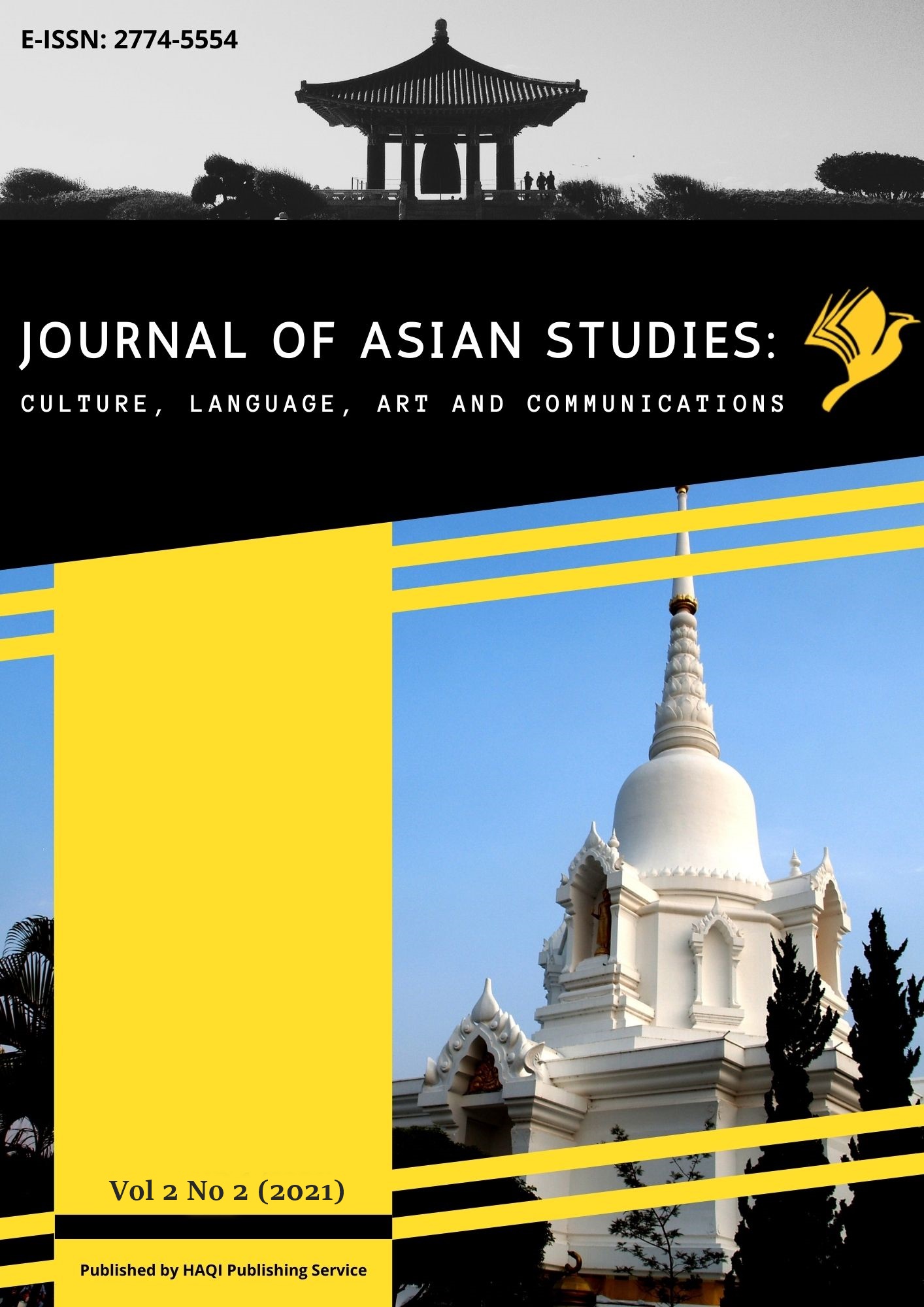
Journal of Asian Studies or JAS (2774-5554) published by HAQI Publishing Service, is a leading academic journal dedicated to exploring the dynamic intersections between traditional Asian studies and contemporary socio-technical challenges. It serves as a strategic platform for researchers, academics, and practitioners to disseminate ideas that bridge the traditions of humanities scholarship with the socio-technical challenges of the 21st century.
JAS invites contributions addressing Indigenous data sovereignty and sovereign digital infrastructure as mechanisms for safeguarding local knowledge in the modern era. Discussions on the application of the CARE and OCAP principles to regional data governance; the development of geofenced sovereignty protocols to protect sacred knowledge and digital cultural assets; and the decolonisation of digital infrastructure such as the cloud, AI, and GIS to support local epistemic authority are key areas of ongoing development.
The journal also focuses on algorithmic justice and human rights-based AI governance. Its goal is to understand the ethical, legal, and social effects of automated systems in public administration and education in the Asia-Pacific region. The journal examines algorithmic bias audits in social services and educational settings, mitigates minimal compliance in implementing AI regulations, and analyses the impact of artificial intelligence on democratic values and the protection of vulnerable populations to ensure technology serves humanity, not the other way around.
This journal also explores spatial pedagogy and contextual ecosystem transformation through connectivity technologies that empower cultural identity and language revitalisation. The use of AR, VR, and XR for language revitalisation and the preservation of ancestral narratives; balancing ICT infrastructure investment with culturally and linguistically responsive digital content; and resolving land-use conflicts through transparent spatial data visualisation are increasingly relevant themes in the era of digital transformation.``